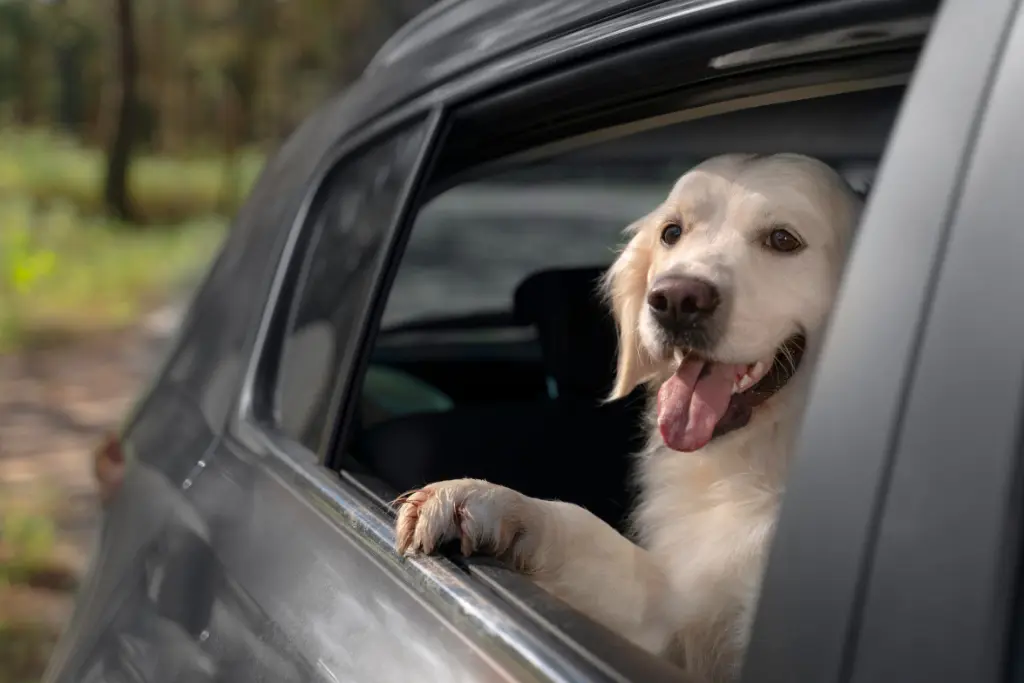
Most pet owners who leave a dog in a parked car on a warm day aren’t being careless. They genuinely believe a few minutes is harmless. A quick errand. Windows cracked. Shade nearby. It’ll be fine.
It isn’t always fine, and the margin between uncomfortable and fatal is much narrower than most people realize.
A car parked on a warm Ontario summer day can reach dangerous internal temperatures within minutes. At 27°C outside, the interior of a parked vehicle can climb past 38°C in under 10 minutes. At 32°C outside, that number escalates faster still. A dog’s body temperature doesn’t have to rise much; heatstroke begins around 40°C, before organ damage becomes a real possibility.
At Loving Paws & House Sitting, summer pet safety is something we take seriously across every city we serve. Our caregivers are trained to recognize heat distress, maintain safe environments during visits, and respond appropriately in an emergency. Here’s what every Ontario pet owner should know before the season gets going.
Why Hot Cars Become Deadly So Quickly
A parked car functions like a greenhouse. Solar radiation passes through the glass and heats the interior surfaces, the seats, the dashboard, and the floor. Those surfaces then radiate heat back into the enclosed air, which has nowhere to go. The temperature keeps climbing even after the engine is off and the sun shifts.
This isn’t a gradual process. It’s rapid, and it’s relentless.
The Temperature Danger Zone Explained
On a 29°C Ontario afternoon, the inside of a parked vehicle can reach over 50°C within 20 minutes. Cracking the windows reduces that slightly, but not meaningfully. Studies consistently show that partially open windows have minimal effect on interior temperature escalation. The greenhouse effect doesn’t depend on a sealed environment. It depends on the glass and the sun exposure.
For dogs, who regulate body temperature primarily through panting rather than sweating, a hot enclosed space removes the one mechanism they have for cooling themselves. The hot air they’re panting into is already saturated with heat. They can’t cool down. They can only overheat faster.
Early Signs of Heat Distress
The progression from discomfort to emergency can happen in under 15 minutes in extreme heat. Early signs of heat distress in dogs include:
- Excessive, frantic panting
- Heavy drooling or thick, ropey saliva
- Bright red gums or tongue
- Glassy or unfocused eyes
- Weakness or staggering
- Vomiting
If a dog reaches the point of collapse, seizure, or loss of consciousness, heatstroke has set in. Without immediate intervention, cooling the animal and getting to a veterinarian, organ failure and death can follow rapidly. Treatment for severe heatstroke in dogs can cost between $500 and $5,000, depending on the level of intervention required.
Why “Just a Few Minutes” Is Dangerous
The most persistent myth about pets in hot cars is that a brief stop is harmless. The problem is that brief stops rarely stay brief. A five-minute errand becomes 15. A quick coffee becomes a lineup. A fast grocery run becomes running into a neighbour.
The dog in the car doesn’t know you’re coming back in five minutes. Their body doesn’t care. The temperature keeps rising regardless of your intentions, and by the time you return, you may be looking at a medical emergency.
Ontario Laws Protecting Pets in Vehicles
Ontario has clear legislation on this. Pet owners and bystanders both need to understand what the law says and what it allows.
What the PAWS Act Says About Leaving Pets in Cars
The Provincial Animal Welfare Services Act, the PAWS Act, is Ontario’s primary legislation governing animal welfare. Under the Act, leaving an animal in conditions that cause or are likely to cause distress is a violation. That includes leaving a pet in a hot vehicle.
PAWS Act inspectors and law enforcement have the authority to intervene when an animal is observed in distress. Penalties for animal cruelty and neglect under the Act are significant, including fines and potential prohibition from owning animals. Leaving a pet in a hot car is not a grey area under Ontario law; it’s a welfare violation with real consequences.
What Good Samaritans Should Do First
If you see a pet in a hot vehicle and the animal appears to be in distress, here is the recommended course of action:
- Assess the animal’s condition. Is the dog panting heavily, unresponsive, or showing visible signs of distress? Or are they resting comfortably in a shaded back seat? The urgency of your response depends on what you observe.
- Note the vehicle details. Make, model, colour, licence plate, and parking location. This helps authorities respond quickly.
- Call for help before taking independent action. Contact local police, bylaw enforcement, or animal services immediately.
- Stay with the vehicle. Don’t leave. Keep monitoring the animal and be there when help arrives.
- If the animal is in immediate, life-threatening distress and help is not arriving in time, Ontario law does provide some protections for individuals acting in good faith to protect an animal. However, the safest and most legally defensible approach is always to involve authorities first and document your actions clearly.
Independent window-breaking without attempting to reach authorities first carries legal risk. The step-by-step approach above protects the animal and protects you.
Emergency Contacts in Mississauga
If you’re in Mississauga and you encounter a pet in a hot vehicle, contact Mississauga Animal Services at their emergency line: 905-896-5858. For life-threatening emergencies where an animal is unconscious or seizing, call 911 directly.
Having these numbers saved in your phone before you need them is worth the 30 seconds it takes.
Real Incidents in Ontario Show the Risk
Ontario has seen preventable hot car deaths involving pets, including a widely reported Oshawa case where a dog died after being left in a vehicle while the owner ran errands on a warm afternoon. The owner wasn’t negligent in the way most people picture negligence; they hadn’t abandoned the dog. They had simply misjudged how quickly the situation would become fatal.
These cases don’t make the news because owners are monsters. They make the news because well-meaning people underestimate heat, overestimate the safety of a cracked window, and make a calculation that turns out to be tragically wrong.
Awareness doesn’t require assigning blame. It requires understanding the physics and adjusting behaviour accordingly.
Why In-Home Pet Sitting Prevents Heat Emergencies
The most effective way to prevent a hot car emergency is to never put a pet in a situation where it could happen. In-home pet care does exactly that.
No Car Transport Required
Boarding requires transport. Taking a pet to a daycare or facility involves loading them into a vehicle, driving across the city, and potentially leaving them in the car while you park and check in. Every one of those moments is a window of risk on a hot day.
When a Loving Paws caregiver comes to your home, your pet never leaves their environment. There’s no car, no parking lot, no risk of a five-minute stop becoming a thirty-minute emergency. The simplest interventions are often the most effective.
Climate-Controlled Environment
Our caregivers check the indoor temperature during summer visits. If a home’s air conditioning has malfunctioned or a window has been left in a position that creates a heat trap, we notice it and respond, adjusting airflow, contacting the owner, or taking appropriate steps based on the animal’s condition.
We ensure water bowls are full and fresh at every visit. Dehydration accelerates heat-related illness, and pets left for hours in warm homes without adequate hydration are at risk even indoors. These checks take minutes and matter significantly.
Regular Safety Checks
Beyond temperature and hydration, our caregivers observe the overall state of the pet and the environment during every summer visit. Activity supervision during the hottest parts of the day, keeping dogs in shaded areas, avoiding peak afternoon heat for walks, and recognizing early panting signs during exercise are standard practices, not add-ons.
When something doesn’t look right, we contact the owner immediately and, if necessary, coordinate veterinary attention without waiting for the owner to return.
Summer Pet Safety Challenges in Ontario Cities
Ottawa’s Downtown Heat and Condo Living
Ottawa summers bring concentrated urban heat that condo-dwelling pet owners feel acutely. Pavement and parking structures near the ByWard Market retain and radiate heat in ways that make urban walks genuinely risky during peak afternoon hours. Dogs walking on pavement that exceeds 60°C, which black asphalt can reach in full Ontario summer sun, risk burned paws in addition to heat exhaustion.
Bruce Pit offers relief with shaded trails and off-leash freedom, but timing matters. Early morning or evening visits are far safer than midday outings during a heat wave. Our Ottawa caregivers schedule walks accordingly.
Hamilton’s Humidity Increases Heat Risk
Heat plus humidity is harder on animals than dry heat at the same temperature. Hamilton’s geography and proximity to the lake create summer humidity levels that reduce the effectiveness of panting, the primary cooling mechanism for dogs, and accelerate overheating even at temperatures that might seem moderate.
Dogs exercised along Dundas Valley trails or near Bayfront Park during humid Hamilton afternoons need shorter outings, more frequent water breaks, and a caregiver who understands the signs of early heat stress. We adjust walk length and intensity based on the humidex, not just the temperature.
Mississauga Travel and Airport Parking Risks
Mississauga families travelling through Pearson Airport face a specific risk scenario: the rushed pre-travel period where pets may be in vehicles during airport runs, parking lot stops, or last-minute errands. Summer travel departures are a high-risk window for exactly the kind of “just a few minutes” situation that leads to emergencies.
Having Loving Paws in place before departure eliminates the problem. Your pet is at home with a caregiver the morning you leave, not in the back seat of a car in a parking structure while you handle check-in. For our clients along the Port Credit and Credit River areas, this peace of mind during the travel transition is something they come back to us for year after year.
Myth vs. Reality About Pets in Cars
Myth: Cracked Windows Keep Pets Safe
Partially open windows reduce interior temperature by a few degrees at most under most conditions. On a warm Ontario day, that difference is not meaningful enough to prevent heatstroke. The greenhouse effect inside a vehicle does not require sealed windows to operate.
Myth: A Quick Store Stop Is Harmless
Time perception changes in stores. A stop that feels like five minutes is frequently ten or fifteen. Even if it truly were five minutes, that’s enough time for a vehicle interior to climb into dangerous temperature ranges on a hot day. There is no reliably safe duration for leaving a pet in a warm car.
Myth: Boarding Is the Only Safe Alternative to Car Travel
In-home pet sitting is demonstrably safer for most pets in summer. There’s no transport involved, no unfamiliar environment, no exposure to other animals’ illnesses, and no climate uncertainty. Your pet stays in their home, with someone trained in heat safety keeping a direct eye on them.
Why Ontario Pet Owners Choose Loving Paws
Bonded, Insured Caregivers
Every Loving Paws caregiver is background-checked, insured, and bonded. Our caregivers are trained in pet safety protocols, including heat stress recognition, hydration management, and emergency response procedures. When you leave your pet with us, you’re leaving them with someone accountable, experienced, and prepared.
Ready-Key Secure Home Access
The Ready-Key program provides consistent, secure access to your home without the need for you to be present or coordinate key handoffs. Combined with our e-diary updates and photo reports after every visit, you stay informed about your pet’s condition throughout the day, including on the hottest summer afternoons.
Emergency Preparedness
We know which Ottawa, Hamilton, and Mississauga veterinary clinics handle emergencies and how to reach them quickly. Our caregivers don’t make veterinary decisions independently, but they know how to recognize when one is needed and how to act without delay. That preparedness is part of what we offer, not just companionship for your pet, but a trained response if something goes wrong.
Frequently Asked Questions
How hot does a car get in summer in Ontario?
On a 27°C day, a parked vehicle can reach over 49°C within 20 minutes. On hotter days, temperatures climb faster. The interior consistently runs 20 to 30 degrees above the outside ambient temperature, regardless of whether windows are cracked.
Is leaving a pet in a car illegal in Ontario?
Under the PAWS Act, leaving a pet in conditions likely to cause distress, including a hot vehicle, is a provincial offence. Enforcement authorities have the power to intervene and remove animals in distress, and penalties for violations are significant.
What should I do if I see a dog in a hot car?
Assess the animal’s condition, note the vehicle details, and call local animal services or police immediately. Stay with the vehicle until help arrives. In Mississauga, contact Mississauga Animal Services at 905-896-5858. For life-threatening emergencies, call 911.
Can I break a window to save a pet in Ontario?
Ontario law offers some protection for individuals acting in good faith to save an animal in immediate danger. However, the legally safest approach is always to contact authorities first and document your actions thoroughly. Break a window only when the animal’s life is in immediate jeopardy and help is not arriving in time.
How quickly can pets get heatstroke?
In a hot vehicle, heatstroke can develop in as little as 10 to 15 minutes. A dog whose body temperature reaches 40°C is in danger. At 41°C and above, organ damage begins. The speed of progression depends on the outside temperature, humidity, breed, age, and the individual animal’s health.
What are the first symptoms of heat exhaustion in dogs?
Frantic panting, excessive drooling, red gums, weakness, vomiting, and glazed eyes are the earliest signs. If any of these are present, move the dog to a cool area immediately, apply cool, not cold, water to the body, and contact a veterinarian.
Is in-home pet sitting safer than boarding in summer?
For most pets, yes. In-home care eliminates vehicle transport risk, keeps pets in a familiar climate-controlled environment, ensures hydration monitoring, and provides a trained caregiver who adjusts activity based on heat and humidity conditions.
Who should I call for an animal emergency in Mississauga?
Contact Mississauga Animal Services at 905-896-5858 for animal welfare concerns. For immediate life-threatening emergencies involving any animal, call 911.
Keeping Pets Safe During Ontario Summers
Hot car deaths are preventable. Every single one of them.
They happen when well-intentioned people underestimate heat, overestimate window ventilation, and make time calculations that don’t account for how quickly things can go wrong. Awareness changes that. So does having a care plan that keeps your pet out of those situations entirely.
At Loving Paws, we’ve been caring for pets across Ottawa, Hamilton, and Mississauga through every Ontario summer since 2005. Our caregivers know what heat stress looks like, how to prevent it, and when to act. Your pet stays home, stays cool, and stays safe.
That’s the simplest version of summer pet safety we know, and it works.
Loving Paws & House Sitting has been serving Ottawa, Hamilton, and Mississauga since 2005. Our caregivers are background-checked, insured, bonded, and trained to Pet Sitters International standards. Learn more about our summer pet safety services.