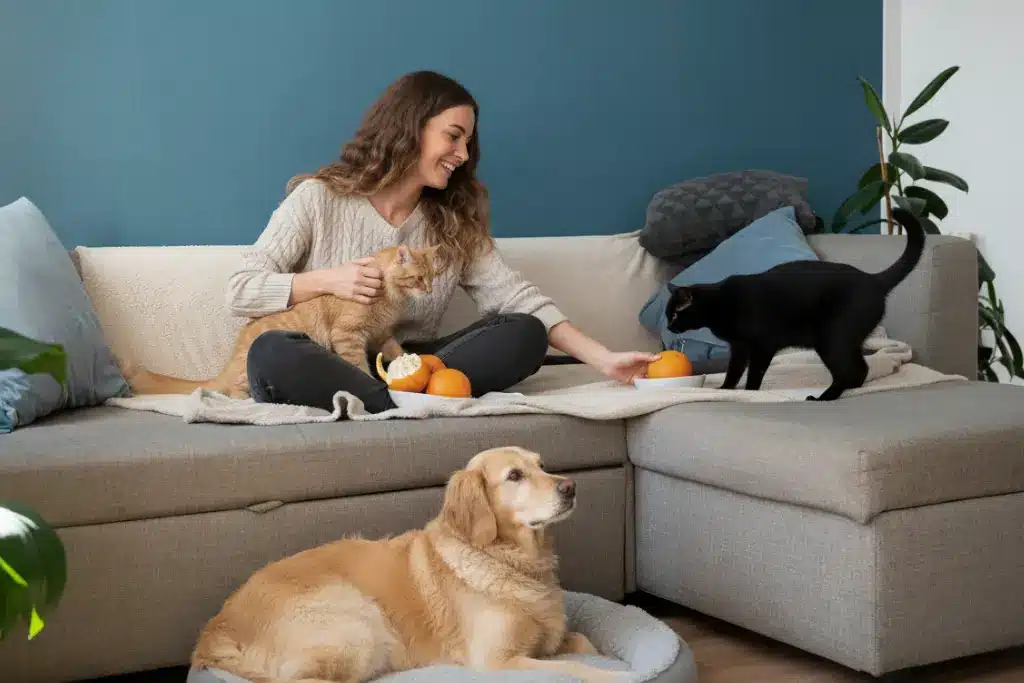
Walking into a home with four animals waiting at the door, each with their own feeding time, their own quirks, and their own ideas about personal space, is a completely different experience from caring for one pet. We’ve done it hundreds of times, and we’ve learned that it takes real preparation, genuine skill, and a calm, consistent presence to keep everyone settled.
Whether you’re a federal public servant based near ByWard Market catching an early flight, or a Mississauga family leaving through Pearson Airport for two weeks, the reality is the same: your pets need more than someone who just shows up and fills a bowl.
Most Canadian households now manage multiple pets. More than half of homes with pets have at least two, and that number has grown steadily since 2020. Multi-pet households need a different level of care, and that’s exactly what we’ve built our service around.
Why Multi-Pet Homes Are More Common Than Ever
The Rise of the “Mini Zoo” Household
Between 59 and 65% of Canadian households own at least one pet, and Ontario has seen some of the highest adoption growth in the country, estimated at around 37% since 2019. The total Canadian pet population is now estimated at roughly 28.5 million animals. That’s a lot of routines, a lot of personalities, and a lot of families figuring out what to do when life takes them away from home.
Multi-species homes are especially common — dogs and cats under the same roof, or a rabbit sharing space with a couple of indoor cats. Each combination brings its own dynamic.
Why Multi-Pet Homes Need Specialized Care
Somewhere between 14 and 20% of dogs experience separation anxiety to a meaningful degree. When you add more animals to that picture, disrupted routines don’t just stress one pet; they ripple through the whole household.
In-home care preserves the environment these animals know. Their scents, their spaces, their feeding spots, all of it stays intact. That matters more than most people realize, especially in multi-pet homes where the social hierarchy between animals has taken months or years to settle.
The Reality of Managing 4+ Pets at Once
Caring for a single dog or cat is manageable for most people. Caring for four or more animals with different diets, different energy levels, and different emotional needs is a logistical job that requires actual training and experience.
Here’s what the day-to-day actually looks like.
Feeding Logistics — The Most Important Routine
Feeding time is where things can go sideways fastest in a multi-pet home. Two dogs who are fine together the rest of the day can become tense around food. A cat who eats slowly gets crowded out. A small dog gets nervous near a larger one.
Getting feeding right means understanding each animal’s pace, appetite, and reaction to others and structuring the environment accordingly.
Resource Guarding Prevention
Resource guarding is one of the most common behavioural issues we manage in multi-pet homes. It’s not aggression, it’s anxiety. An animal that feels uncertain about their food, their space, or their toys will guard them.
Professional management includes separate feeding zones for each pet, consistent timed routines so animals know when food is coming, and careful monitoring for behavioural changes that might signal tension building before it becomes a problem.
Exercise Planning for Different Personalities
A five-year-old Labrador Retriever and a twelve-year-old beagle don’t need the same walk. Neither does a high-energy rescue dog who’s still adjusting to a new home. Part of professional multi-pet care is building an exercise plan that serves each animal, not just herding everyone out the door at once.
Cats in multi-pet homes need active enrichment, too. A bored cat in a house full of dogs can develop stress behaviours quickly. We make time for dedicated play, window access, and quiet spaces where they can decompress.
Small pets, rabbits, guinea pigs, birds — need their own check-ins as well. They’re easy to overlook when there are dogs demanding attention at the door.
The “Attention Balance” Challenge
In a four-plus pet home, there’s always someone who feels left out. Animals know. A dog who normally gets a lot of one-on-one time will notice if that changes.
We build emotional reassurance into every visit, not just physical care. That means quiet time with the shy cat, a few extra minutes with the anxious dog, and consistent, calm interactions that help every animal feel seen.
Why In-Home Pet Sitting Works Best for Multi-Pet Families
Maintaining Familiar Routines
Animals are creatures of habit. When you remove them from their home and place them in a new environment, everything they rely on — sounds, smells, layout, schedules disappears at once.
For a single confident dog, that might be manageable. For a multi-pet household, especially one that includes anxious, senior, or rescue animals, it can be genuinely distressing. Keeping pets in their own home removes that layer of stress entirely.
Lower Stress Than Boarding Facilities
Boarding works for some animals. But for most multi-pet households, placing every animal in a facility means each one dealing with kennel noise, unfamiliar animals, and unpredictable schedules at the same time.
Research consistently shows that routine stability is one of the strongest predictors of animal well-being during an owner’s absence. In-home care delivers that stability in a way that boarding simply can’t replicate.
Professional Oversight for Medical Needs
Multi-pet homes often include at least one animal with a medical need, such as a senior dog on daily medication, a cat recovering from surgery, or a rabbit with a sensitive digestive system. Missing a dose or misreading a symptom isn’t just inconvenient; it can become a serious health issue quickly.
Our caregivers manage medication schedules, monitor for signs of discomfort or change in behaviour, and communicate clearly if anything seems off. That level of attentiveness doesn’t happen at a boarding facility with dozens of animals to manage.
Inside Loving Paws’ Multi-Pet Expertise
Loving Paws has been caring for Ontario families since 2005. In nearly two decades of in-home pet care, we’ve sat in homes with two dogs and three cats, homes with birds and reptiles alongside a senior dog, and everything in between. Multi-pet households are not the exception for us; they’re a regular part of what we do.
Coordinated Care for 4+ Pets
Before we ever step through the door, we build a structured care plan for the home. That includes a feeding rotation system tailored to each pet’s schedule, enrichment activities for different species and energy levels, and a clear record of each animal’s needs, quirks, and preferred handling.
Nothing is left to guessing. Your caregiver knows who eats first, who needs space during meals, and which dog needs an extra lap around the yard before bedtime.
Communication Owners Can Trust
We know what it feels like to be away and wonder if everyone is okay. That’s why every visit includes photo updates and detailed e-diary notes sent directly to you. You’ll see who ate, how the walk went, and any small things your caregiver noticed.
It sounds simple, but it makes an enormous difference, especially when you’re managing the mental load of a multi-pet household from across the country or overseas.
Secure Home Access for Frequent Travelers
Our Ready-Key program means you don’t have to coordinate key handoffs every time you travel. Your trusted caregiver has secure, pre-arranged access to your home. It’s one less thing to manage, and one more reason to feel confident that everything is handled.
All Loving Paws caregivers are background checked, insured, and bonded. We adhere to Pet Sitters International standards and carry full insurance coverage, which matters when you’re handing someone the keys to your home and the care of your animals.
Local Multi-Pet Challenges Across Ontario
Every region we serve comes with its own set of practical realities. Here’s what multi-pet care actually looks like on the ground across Ontario.
Ottawa Multi-Pet Homes
Ottawa has a high concentration of condo and apartment living, which means many multi-pet households are managing dogs, cats, and sometimes small pets in tighter spaces. Coordinating exercise in winter, when -20°C temperatures make outdoor time genuinely challenging — requires planning and flexibility.
We know the routes around Bruce Pit that work in different seasons, and we know how to manage condo-friendly routines that keep animals exercised and settled without access to a backyard. Clients near ByWard Market often have tight schedules and need visits that are efficient but genuinely attentive.
Hamilton Multi-Pet Households
Hamilton’s humidity in summer adds a layer of complexity for brachycephalic breeds and senior dogs. High-energy breeds that love the escarpment trails around Dundas Valley need different handling in July than they do in October.
We plan accordingly, adjusting walk timing, intensity, and recovery routines based on the weather and the individual dog. A household with a young Border Collie and a senior Basset Hound near Bayfront Park needs two completely different plans running simultaneously.
Mississauga Travel-Heavy Families
Mississauga families with access to Pearson Airport tend to travel frequently, often on short notice. Multi-pet suburban homes near Port Credit or along the Credit River trails are a significant part of our GTA client base.
These families need a caregiver who knows the home, knows the animals, and can step in smoothly, not someone reading intake notes for the first time at the front door. That’s exactly why our ongoing caregiver relationships matter so much.
Myth vs. Reality: Sitting a “Zoo”
Myth: In-Home Sitting Isn’t Safe for Multiple Pets
This one comes up a lot. The concern usually centres on the idea that managing several animals at once leaves room for things to go wrong, a fight, a missed feeding, or an animal that gets overlooked.
Professional in-home caregivers use structured protocols for feeding separation, supervised introductions during visits, and clear escalation procedures if anything changes. It’s not casual supervision, it’s a managed care plan.
Myth: Boarding Is Always Cheaper
When you account for the per-animal cost at a boarding facility, in-home sitting for multi-pet households is often competitive, sometimes less expensive. And that’s before considering the stress-related vet visits that can follow a difficult boarding experience. A dog that stops eating, develops diarrhea, or injures themselves in a kennel environment adds real costs quickly.
Myth: Any Sitter Can Handle Multiple Pets
Managing one easy-going dog is not the same skill set as coordinating feeding schedules, managing resource guarding, monitoring a cat with a medical need, and keeping a rabbit settled, all in the same home, on the same afternoon. Multi-pet logistics require experience, training, and genuine attentiveness.
Professional vs. App-Based Pet Sitting
Platform Services (Rover, Pawshake)
Gig-based pet care platforms connect owners with independent sitters, but the experience level and training varies significantly from one person to the next. Some sitters are excellent. Others have never handled a multi-pet household or a medically complex animal.
Accountability on these platforms sits largely with the rating system. There’s no team behind the sitter, no coordinated protocol, and no consistent standard of care.
Professional Pet Sitting Teams
With Loving Paws, you’re working with a team of 15+ trained, insured, and background-checked caregivers operating under consistent standards. If your regular caregiver has an emergency, there’s a qualified backup. Your intake notes, your pets’ needs, and your home access are all managed through an accountable system, not a stranger’s personal app profile.
Practical Tips for Preparing a Multi-Pet Home Before Travel
A little preparation before you leave makes a significant difference in how smoothly things go.
Create Clear Feeding Instructions
Write out each pet’s feeding schedule separately amounts, timing, location, and any sensitivities. If two animals need to be fed in different rooms, say so. Don’t assume your caregiver will figure it out as they go.
Document Medical Needs
List every medication, the dose, the timing, and how to administer it. Include what to watch for if something seems off. Keep medications clearly labelled and in one place.
Leave Behaviour Notes (Resource Guarding, Anxiety)
If one of your dogs guards their crate, your caregiver needs to know before the first visit, not after an incident. Notes about triggers, warning signs, and de-escalation approaches are genuinely useful and help us serve your animals better from day one.
Share Emergency Contacts
Include your vet’s number, an emergency contact who knows the animals, and any after-hours veterinary clinic in your area. We hope to never need them, but having them ready is part of responsible multi-pet care.
FAQ
Can one sitter safely manage four or more pets?
Yes, with the right preparation and protocols in place. Structured feeding plans, separate zones for eating and resting, and consistent monitoring make it very manageable for a trained caregiver. We handle multi-pet homes regularly across Ottawa, Hamilton, and Mississauga.
How do professional sitters prevent food aggression?
We use separate feeding stations for each animal, consistent timing so animals aren’t anxious about when food is coming, and careful observation during meal times. Animals who have a history of resource guarding are noted in the care plan so the caregiver knows exactly what to expect.
What if one pet requires medication?
Medication administration is part of our standard in-home sitting service. We handle everything from oral medications to subcutaneous fluids for cats to post-surgical care. Details are documented in the care plan before we begin.
Is in-home care better for anxious animals?
For most anxious animals, yes. Staying in a familiar environment with familiar smells, familiar furniture, and familiar sounds dramatically reduces stress compared to being moved to a boarding facility. This is especially true for rescue animals and pets with separation anxiety.
How do sitters manage different feeding schedules?
Each pet’s feeding instructions are mapped out in the care plan we build before you leave. If one dog eats at 7 am and another at 7:30 am in a separate room, that’s exactly how we do it. Nothing is improvised.
Are professional pet sitters insured in Ontario?
Loving Paws caregivers are fully insured and bonded. We adhere to Pet Sitters International standards. This matters both for liability and for your peace of mind; you’re not relying on a casual arrangement.
What does multi-pet house sitting typically cost?
Rates vary based on the number of pets, visit frequency, and any medical or special needs involved. In most cases, in-home care for multiple pets is competitive with per-animal boarding rates and avoids the added costs that sometimes follow a stressful boarding experience. We’re happy to provide a clear, honest quote.
Can sitters handle multiple species (dogs, cats, rabbits)?
Yes. Our team regularly cares for mixed-species households, dogs and cats together, small pets like rabbits and guinea pigs alongside larger animals, and homes with birds or reptiles. Each species gets the specific handling and enrichment they need.
Why Multi-Pet Families Trust Loving Paws
We’ve been caring for Ontario pets since 2005. In that time, we’ve served over 5,000 clients and built a 4.9/5 rating based on what pet owners actually care about: showing up reliably, communicating honestly, and genuinely caring for their animals.
Our team of 15+ insured caregivers isn’t a collection of independent contractors hoping for five-star reviews. It’s a coordinated, accountable team that has handled anxious rescues, post-op cats, senior dogs with daily medications, and busy households with four animals, all convinced they deserve the most attention.
We know what we’re doing. And we know how much your animals mean to you.